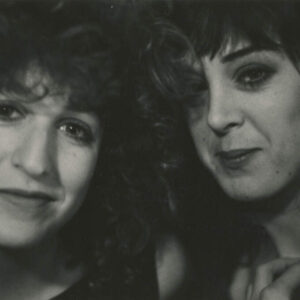
Preserving the legacy of ’80s Boston rock band Salem 66
WBUR | June 5, 2025
Art-rock band Salem 66 tore through the underground music scene in Boston in the 1980s. The group played alongside musicians like Amherst-born rock band Dinosaur Jr., toured across the country and garnered coverage in publications including Rolling Stone and The Village Voice.
Despite the success, the band’s discography wasn’t available on streaming until now. Salem 66 founders Judy Grunwald and Beth Kaplan worked with Don Giovanni Records to reissue their full catalog and release the new compilation “SALT” with a selection of their favorite tracks on June 6.
Grunwald, 67, and Kaplan, 63, spoke about their introduction on Zoom from their homes in Essex and Providence. They first met on a musical blind date. Kaplan visited Grunwald’s apartment, and the pair sifted through notebooks of each other’s songs.
“ It’s kind of funny in retrospect. We didn’t bring instruments,” said Grunwald. “We liked each other’s lyrics…I think both of us had a broken plate as a metaphor for something internally broken, and I remember I thought that was significant.”
“A sign,” Kaplan said, laughing.
They founded Salem 66 in 1982 and got to work. The band released four albums and an EP with indie label Homestead Records between 1984 and 1990. Shortly after forming the band, Kaplan and Grunwald auditioned and added Susan Merriam as the drummer. She later left to pursue painting, and other musicians cycled out on guitar and drums throughout the band’s run.
Salem 66’s music often revolves around romance and big feelings. Poetic pop melodies merge with grungy rock and thrashing guitar. They appreciate a minor key and some angsty dissonance. The group has been compared to rock bands R.E.M. and Talking Heads.
Kaplan and Grunwald said they loved how saturated the music scene was in the city in the ‘80s. “ Almost any night you could go see an interesting band or go to two clubs in one night,” said Kaplan.
Salem 66 played local venues like The Rathskeller, known as The Rat, and Paradise Rock Club.
Kaplan added that local bands were supported by the opening of new clubs and coverage by college radio stations and alternative publications.
“ All the infrastructure was there to support a scene,” she said. “It was all on a shoestring [budget], so mostly running on a lot of dedication from people bringing whatever their interests and resources and talents were.”
Salem 66 was one of the only women-led rock bands at the time, and they didn’t get the same treatment as other rock musicians.
“Sexism was everywhere then,” said Grunwald. “You got catcalled all the time. You got told to smile all the time. That was how things were. And club owners treated us like perhaps we were available for a date later or something.”
She remembers a time when the band’s manager sent a cassette to a recording company, and they responded with an upsetting letter. Grunwald said they wrote something to the effect of:
“‘We feel that women in bands is a trend that has crested and is on the downswing now, so we’re gonna pass, but keep us abreast of any further development,’” she recalled. “Like God, that sort of defines Freudian slip.”
Some reviews of the band reflect the same blatant sexism, like one in The WARD Report from 1987. Critic Sean Elder writes that Salem 66 “isn’t ‘women’s music’ (whatever that means),” and goes on to warn against dating a member of the band: “…you’d be crazy to want to go out with any of them. They might write a song about you.”
Grunwald says not many other women were touring in bands at the time, so they were eager every time they saw another female musician on the road. “ It was like an instant bonding thing,” she said.
Salem 66 disbanded in 1989 and never toured with its final record, “Down the Primrose Path.” But Grunwald and Kaplan agreed that it felt like a natural ending.
Reflecting on the band’s breakup, Kaplan told the Boston Phoenix’s Polly Campbell in October 1990: “We had a long, weird career. I think there was a point early on where the big break should have happened for us. It’s not like we thought that if we could get onto a major label, it would solve all our problems, but we got to the point where we had to make some sort of level change and, in the end, it just didn’t happen.”
So they went their separate ways — Kaplan became an archivist and Grunwald went to culinary school.
Throughout the years, Kaplan said people would reach out to see if they could send over copies of their favorite Salem 66 songs.
During the pandemic, as many people did, they reflected on their lives and started to think more seriously about making their music accessible to listeners again. Kaplan started reaching out to labels, and they landed on Don Giovanni Records.
“SALT” releases 41 years after Salem 66’s first record. The album includes 10 tracks in chronological order of when they were initially released.
Kaplan said a throughline across their repertoire is the “intensity of youth.”
“ Everything’s so deeply felt,” she said. “And I feel like if I were writing songs now, they would be a little bit more observational.”
This re-release marks a turning point for Grunwald and Kaplan, who previously felt like this chapter of their lives was lost to time.
“We both felt like we were kind of a ghost, and now we’re not a ghost,” says Grunwald.